.....our previous blog post about our wintery and festive time in Belgrade......
Close in proximity to Belgrade, Novi Sad was also a large city (Serbia's second city, in fact) but had a completely different feel to it than the capital. The city originally grew from the giant river fortress built by the Habsburgs in the late 1600s. The House of Habsburg was a royal dynasty that, through strategic marriages, was able to spread its influence throughout Europe between the 15th and 19th centuries. The royal house was aligned with the Roman Catholic church, and as a result banned people of the Orthodox faith from living in the fortress. This led to the creation of the settlement that would become the city of Novi Sad right across the river.
 |
| Monument on Danube River, Novi Sad, Serbia |
 |
| Slobode Square, Novi Sad, Serbia |
 |
| Fort overlooking Danube, Novi Sad, Serbia |
During the 1800s, Novi Sad was under Austro-Hungarian rule, and the majority of the dominant designs of the town's central buildings reflected that. The pastel colours were particularly eye-catching, and gave a light and cheery feeling to the place, even on cold days. Small decorated and covered alleyways lead off wide boulevards, all chock-a-block with cafes, bars and eateries. On the days when the sun came out the streets and cafes were busy as people made the most of the fine weather. A bizarre find was the central H&M clothing store, housed in an incredibly decorated heritage building, with stunning period features along side modern clothes racks.
 |
| Cute alleyway, Novi Sad, Serbia |
 |
| Stately statue with cafe boulevard behind, Novi Sad, Serbia |
 |
| Ballet class in progress, Novi Sad, Serbia |
 |
| An especially opulent frontage, Novi Sad, Serbia |
 |
| Splendid window, Novi Sad, Serbia |
 |
| Messy back streets, Novi Sad, Serbia |
 |
| Beautiful doorway in shadows, Novi Sad, Serbia |
 |
| Extravagant interior of H&M, Novi Sad, Serbia |
 |
| The grand streets of Novi Sad, Serbia |
 |
| Rows of colourful shops, Novi Sad, Serbia |
 |
| Small alleyway leading off main boulevard, Novi Sad, Serbia |
Of course, churches were another main architectural feature of Novi Sad, and the contrast between the main Orthodox and Catholic churches provided some diversity, as did the peculiar Art Nouveau-style synagogue, although the latter was only visible from the outside.
 |
| Orthodox Church lavish interior, Novi Sad, Serbia |
 |
| In awe inside church, Novi Sad, Serbia |
 |
| Gold and painting inside church, Novi Sad, Serbia |
 |
| St Mary's Catholic Church, Novi Sad, Serbia |
 |
| Typical style of orthodox church spire, Novi Sad, Serbia |
 |
| The quirky unused synagogue, Novi Sad, Serbia |
Yugoslavian-era buildings were also a feature, notably apartment blocks and town squares complete with communist style statues. The distinct 1930's style of many of the structures around the city were particularly to our taste.
 |
| Distinctive style in Novi Sad, Serbia |
 |
| Nice little sign in train station, Novi Sad, Serbia |
 |
| Stylish train station, Novi Sad, Serbia |
 |
| Going underground, Novi Sad, Serbia |
 |
| 1930's building in the town centre, Novi Sad, Serbia |
 |
| Checking out the book stall, Novi Sad, Serbia |
 |
| Street sign, Novi Sad, Serbia |
 |
| Interesting door design, Novi Sad, Serbia |
Living in the Sun Hostel in Belgrade for two months had been fantastic. Having different company at any hour of the day or night, it kept us sane and reminded us that we were not going through this shitty situation alone. The socializing also helped keep our minds concentrated on enjoying the present, and away from discarded travel plans. However, having our own apartment in Novi Sad was wonderful in a different way. The cosy space was very warm, and we only had our own routine to be concerned about. Our exercise regime was started up again, which helped our mental conditions immensely, and having our own bathroom and kitchen was luxurious. Our helpful host, a retired professional volleyball player, was very thoughtful and had put much effort into making the place homey and welcoming. The change really did us good, although we were also very happy to return to the Belgrade hostel for a couple of nights before we had to leave Serbia.
 |
| Our lovely modern apartment, Novi Sad, Serbia |
 |
| Our apartment building entrance, Novi Sad, Serbia |
 |
| Our street, Novi Sad, Serbia |
 |
| Funky window design, Novi Sad, Serbia |
Our neighbourhood was brilliantly located and close in proximity to almost everything. The grand old Dunavski Park with it's mature and characterful specimen trees, ponds and fountains was around the corner and was our shortcut to the centre of town.
 |
| Winter scene at Dunavski Park, Novi Sad, Serbia |
 |
| Majestic old trees, Dunavski Park, Novi Sad, Serbia |
 |
| Grand row of seats, Dunavski Park, Novi Sad, Serbia |
Also close was the Varadin Bridge that led to the massive Petrovaradin Fortress. Construction on the fort originally began with the Romans, but from the 16th century the Turks and Austrians rebuilt and expanded it during the many battles over the years. These days, it was more of a spread out park, with plenty of scope for wandering the remains of old walls and moats, and appreciating views out to the river whilst sipping a cappuccino. On a warm Sunday, the atmosphere was impressive, families gathered to stroll or eat a meal, popcorn venders and postcard sellers. During the week the vibe was more lowkey, and we had the place pretty much entirely to ourselves.
 |
| Approach to Petrovaradin Fortress, Novi Sad, Serbia |
 |
| A moment in the sun, Petrovaradin Fortress, Novi Sad, Serbia |
 |
| Tunnels and steps, Petrovaradin Fortress, Novi Sad, Serbia |
 |
| Common sight on European bridges, Petrovaradin Fortress, Novi Sad, Serbia |
 |
| Looking out over the Danube from Petrovaradin Fortress, Novi Sad, Serbia |
 |
| View of Petrovaradin Fortress from Varadin Bridge, Novi Sad, Serbia |
 |
| Poor business trying to keep up with changing closing times, Novi Sad, Serbia |
 |
| Typical building at base of Petrovaradin Fortress, Novi Sad, Serbia |
Neighbourhood markets offered a delightful range of home-grown and home-made products, such as jam, relish, pickles, rakia and wine. The tempting winter ingredients were plentiful, and we took advantage of delicious seasonal vegies- spinach, mushrooms, cauliflower and pumpkin to cook soups and stews. A few other welcome local food discoveries included chunks of smoked bacon, portions of strong cheese and red wine sold by a butcher's shop, of all places. We appreciated buying and cooking healthy meals every day (even though we would swap it all for a spicy pad thai cooked for us on the streets of Thailand in a minute!) Discovering a humble little cafe at our local market, with friendly staff and all sorts of folks gathered for coffee or alcohol was fortuitous. It reminded us of Albanian cafes, and we often partook in delectable apple rakia whilst sitting outside and watching the world go by.
 |
| Nearby Riblja Pijaca fresh market, Novi Sad, Serbia |
 |
| Cappuccinos and apple rakia at local cafe, Novi Sad, Serbia |
A contrasting kind of market was the Najlon Flea Market on the outskirts of town. It was a surprisingly huge area separated into new and second hand sections, with literally every imaginable type of good for sale. Second hand clothes stalls, brick-a-brack and tools, stood next to Yugoslavia memorabilia, bikes, plants and home knitted items. Hordes of people scurried around scouting out bargains on the sunny Sunday when we visited, and grabbing a tasty pljeskavica (burger) and coffee, we happily sat and watched the bustle.
 |
| All sorts for sale, Najlon Flea Market, Novi Sad, Serbia |
 |
| Goods for sale and hordes of people, Najlon Flea market, Novi Sad, Serbia |
An unexpected and delightful afternoon was spent with our host, who offered us a ride to nearby Fruska Gora National Park. She had a family home near the park which she was renovating, and suggested a drive to a few of the close-by sights. We were very grateful to see the beautiful natural place, as there is no public transport right into the park, and we had no other way of arriving there. Even at the end of winter, the sun shining through the bare trees on hillsides was enchanting, and again left us wanting to see the location in a greener month. The peaceful 16th century "new" Hopovo Monastery we dropped in on had some of the most splendid frescos we have seen in Serbia. After talking with our host about the horrors of three months of bombing raids on Novi Sad by the Americans/NATO in 1999, it was significant to see the massive Crveni Cot concrete telecommunications tower on a hill in the forest. The attempt to completely annihilate the tower had failed, and today a mangled mess still stands as a harsh reminder of that terrible time.
 |
| Altar of Hopovo Monastery, Fruska Gora, Novi Sad, Serbia |
 |
| Looking up, Hopovo Monastery, Fruska Gora, Novi Sad, Serbia |
 |
| Frescos inside Hopovo Monastery, Fruska Gora |
 |
| Sunny exterior of Hopovo Monastery, Fruska Gora |
 |
| Crveni Cot Tower, Fruska Gora, Novi Sad, Serbia |
The weather gave us its full spectrum during our February in Novi Sad. The first and last weeks were amazingly warm and sunny, and it felt like spring had arrived with up to 20 degree temperatures. The balmy days had us kind of bouncing around town with everyone else enjoying the conditions. It was lovely to have a break from the cold and made us look forward even more to the coming summer!! The middle two weeks were up and down with both sun and rain, and temperatures ranging from 18 to -5 degrees, sometimes within 24 hours!
 |
| Sun's out! Novi Sad, Serbia |
 |
| Wandering the streets of Novi Sad, Serbia |
 |
| Characterful feature, Novi Sad, Serbia |
 |
| Old and new on streets of Novi Sad, Serbia |
A huge long distance path follows the Danube River through many countries, and the portion running through Novi Sad was a fantastic place for a stroll or a coffee in one of many river side cafes. It was also pleasantly organized, with special lanes for joggers, walkers and cyclists. We've included a map of the route of the Danube here, as we found it interesting. A couple we met travelling years ago canoed down the river from beginning to end, and we always remember being fascinated by their journey.
 |
| Route of the Danube River from Germany to Ukraine |
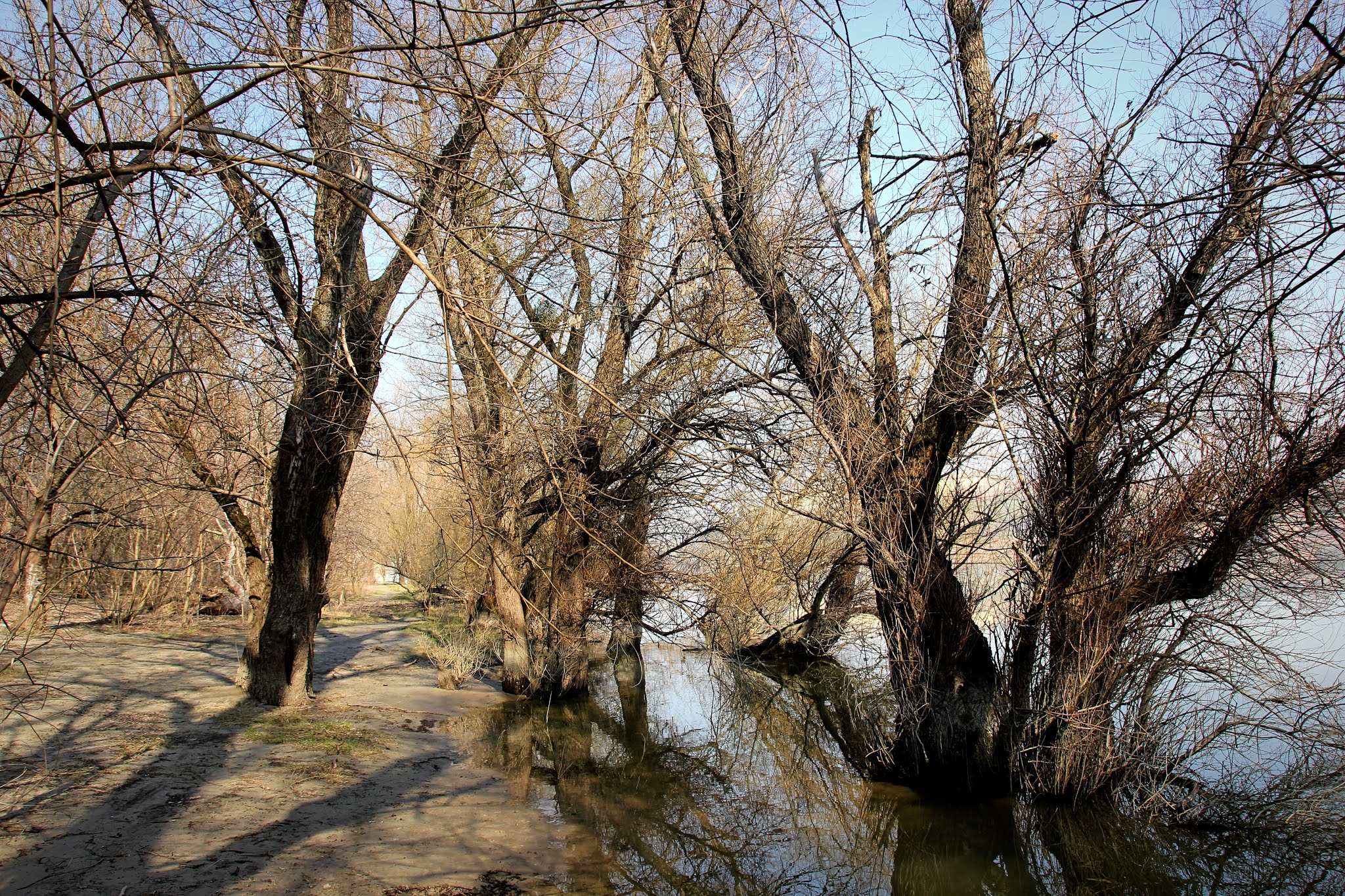
The views of the river and fortress, and the sunny blue sky through the bare winter trees was charming, as was The Strand, the obligatory beach area on the river, which must become packed with bodies in Summer. A couple of particularly pleasurable boozy afternoons were spent in deck chairs on a lawn next to the Danube, forgetting our worries and soaking up some welcome sunshine for an afternoon.
 |
| Misty morning on Danube River, Novi Sad, Serbia |
 |
| Winter scene, Danube River, Novi Sad, Serbia |
 |
| Cafe in the sun, Danube River, Novi Sad, Serbia |
 |
| Relaxing on the banks of the Danube River, Novi Sad, Serbia |
Our days out exploring caused us to realize that as lovely as Novi Sad was, a second visit was really needed in order to fully appreciate the beauty in the warmer weather. This especially applied to The Strand- it would be marvellous to see the beach full of sun bathers and swimmers!
 |
| Selection of iconic street images, Novi Sad, Serbia |
Again, the time had come to decide on our next move from our limited travel options. Our 90 days in wonderful Serbia had come to an end, and a new country was necessary. Taking into account costs, weather and our sanity, North Macedonia seemed as good an idea as any, and we looked into taking a bus from Belgrade to the capital, Skopje.
 |
| A happy Rich at Petrovaradin Fort, Novi Sad, Serbia |
.....our next blog post takes us to strange Skopje, the capital of North Macedonia.....